

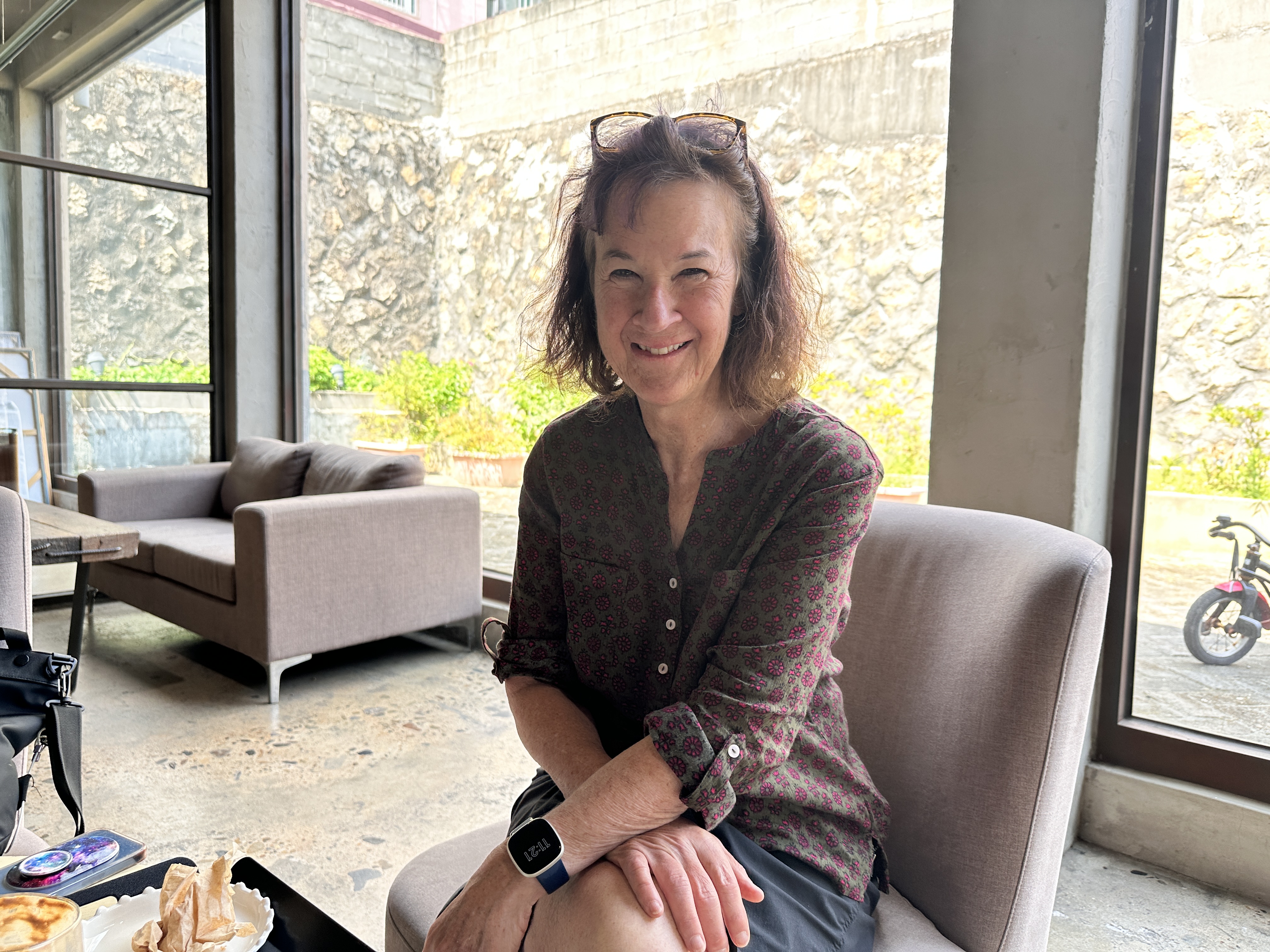
Interviewer: Wonsuh Song
Wonsuh Song: Carol, you recently visited Korea, including the DMZ and the Yeoncheon Center for Unified Korean Future. Can you share your feelings about this experience?
Carol Finn: Visiting the DMZ was an incredibly emotional experience for me. My father was here in June 1953, just after arriving in Korea, and fought in a major battle that was quite traumatic for him. Korea has always been significant to my family because of his service. Growing up, we had Korean flags in our house, and I wrote a presentation about Korea when I was in sixth grade. For many in the U.S., the Korean War is often called a “forgotten war,” but it was never forgotten in our home.
Wonsuh Song: It seems like your father’s experiences in Korea deeply influenced your perspective.
Carol Finn: Definitely. My father’s time in Korea left a lasting impression on him and, by extension, on our family. He was just 23 when he arrived, fresh out of college, and coming from a relatively comfortable background—his father was a doctor. He volunteered for the army out of a sense of duty, thinking it would be a straightforward way to serve his country. But almost immediately, he was thrust into a brutal battle, and that experience changed him forever. He didn’t talk much about it, but I always sensed how significant it was. Being here, in the same place he was, made me feel connected to him in a new way.

Wonsuh Song: What was it like seeing the DMZ firsthand, knowing your father’s history there?
Carol Finn: It was surreal. The DMZ is incredibly beautiful, untouched by development, which was surprising to me. But it’s also a stark reminder of the ongoing tension and danger in the region. While I was looking around with binoculars, I noticed some South Korean soldiers waving at me from a post. It struck me how real and present the division still is. It’s a place where history isn’t just something in the past—it’s ongoing, right in front of you. The visit also made me reflect on the broader issues of division and potential reunification.
Wonsuh Song: How did the visit influence your thoughts on reunification?
Carol Finn: Before coming here, I hadn’t thought much about reunification—it always seemed like a distant possibility. But after visiting the Yeoncheon Center and speaking with people who are deeply invested in the idea, I understand the South Korean government’s desire to keep the hope of reunification alive. They want to be prepared, should a sudden change occur in the North, like what happened in Germany with the fall of the Berlin Wall. However, I also understand the concerns of the younger generation here. They’re dealing with high housing costs, low salaries, and job insecurity, and the prospect of reunification, with its potential economic burdens, can be daunting.
Wonsuh Song: It sounds like you see both sides of the issue.
Carol Finn: Absolutely. The idea of reunification is compelling—it represents a hope for peace and unity. But it’s also practical to consider the economic and social costs. In Germany, reunification was very challenging economically, and it took many years to stabilize. South Korea could face similar challenges. Younger generations here are understandably wary of these potential burdens. It’s similar in the U.S., where young people face economic pressures that make them cautious about large-scale social changes.
Wonsuh Song: Did your father’s experiences shape your understanding of these issues?
Carol Finn: Yes, very much. His stories and the way he spoke about Korea instilled a deep respect in me for the people who have been affected by this conflict. My father’s service was a huge part of his identity, and it impacted how he saw the world. Being here now, I feel a strong connection to that part of his life. When I mention my father’s service to people here in South Korea, they are so appreciative—they often thank me, which always brings tears to my eyes. I wish he could have heard those thanks. It would have meant a lot to him to know that his sacrifices are still remembered and valued.
Wonsuh Song: Your visit seems to have been both professionally and personally significant.
Carol Finn: It was. As a geophysicist, I have always been interested in the geological aspects of this region. But this trip has added a personal dimension that I hadn’t fully anticipated. It’s been a journey of understanding—not just about the land and its geological features, but about history, conflict, and the hope for peace. I feel very privileged to have had this experience, to walk where my father walked, and to understand a bit more about the sacrifices he and many others made. It’s something that will stay with me forever.
Wonsuh Song: Thank you so much, Carol, for sharing your deeply personal reflections with us.
Carol A. Finn (Ph.D.)
Research geophysicist with the Geology, Geophysics and Geochemistry Science Center in Denver, CO.
This extended interview highlights Carol Finn’s emotional and personal connection to Korea, shaped by her father’s service in the Korean War, and explores her professional insights and reflections on the complexities surrounding Korean reunification.